
Key Takeaways:
- Gross profit is based on selling price, while markup is based on cost.
- A healthy flooring business should target an average gross profit margin above 37%.
- Job costing provides visibility into the true profitability of every proposal.
- Retail price formulas automate consistent pricing based on your actual costs.
Pricing Flooring Jobs at a Glance
✓ Know your gross profit margin—not just your markup.
✓ Include all job costs before sending an estimate: materials, labor, freight, commissions, taxes, and overhead.
✓ Job cost every proposal before you send it—not after the job is complete.
✓ Use pricing formulas to keep your quotes consistent and profitable.
Pro Tip: Flooring business software can automate these calculations and help you price every job consistently.
A Lesson Learned the Hard Way

My father ran a large, multi-location flooring business for decades. He had a great instinct for costs and pricing, through years of experience in the industry.
But even with all that experience, his gut-level “guesstimates” occasionally missed the mark and cost him money.
The mistake was a common one: assuming that a closed sale automatically meant a profitable sale.
It doesn’t.
A sale can look great from a revenue standpoint while quietly losing money if costs aren’t fully accounted for. Materials, labor, freight, commissions, and overhead all impact the final profitability of a project.
That’s why profitable flooring dealers don’t rely on guesswork, but instead focus on their numbers before the proposal goes out the door.
So what does it take to price flooring jobs profitably?
It comes down to three things: 1) understanding margin versus markup, 2) consistently job costing every project, and 3) creating retail pricing formulas you can trust.
Margin vs. Markup
Flooring dealers often use “margin” and “markup” interchangeably, but in accounting terms they’re two different calculations. Mixing up the two can lead to underpricing jobs without realizing it.
Markup is a percentage added to your cost.
Gross profit margin is the percentage of your final selling price that remains after direct job costs
The difference matters.
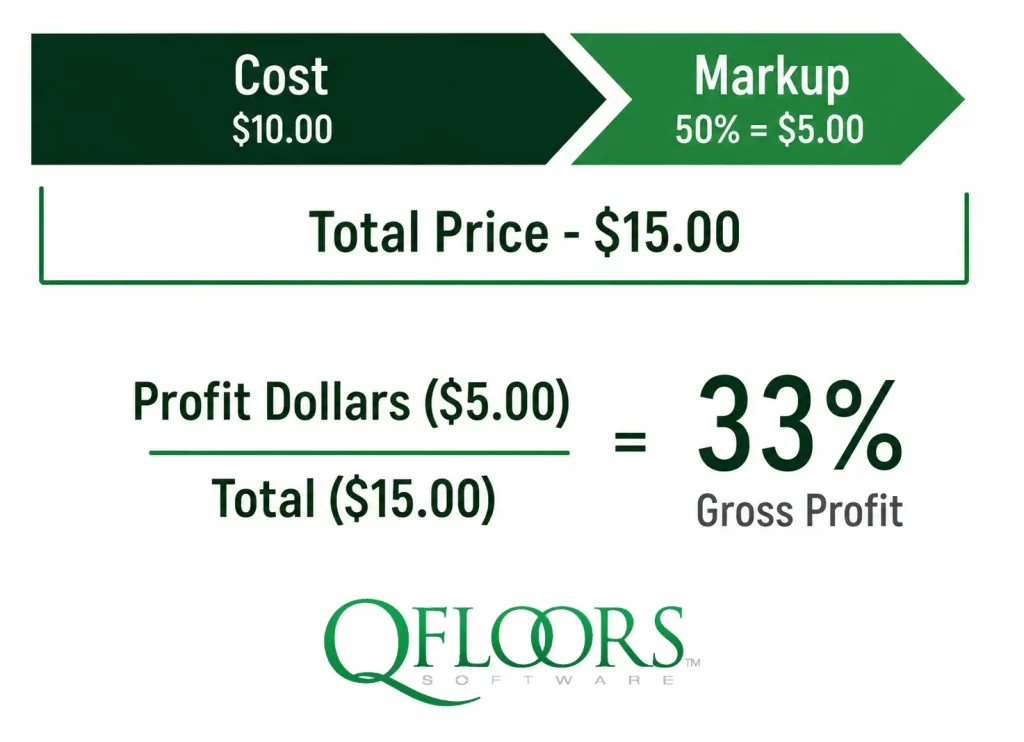
For example, take a product that costs you $10.
If you apply a 50% margin, you’d sell it for $15.
Your profit is $5.
But your gross profit margin is not 50%.
The margin calculation is:
Profit ÷ Selling Price = Gross Profit Margin
$5 ÷ $15 = 33%
That means a 50% markup only creates a 33% gross profit margin.
The biggest pricing mistake dealers make is aiming for a certain markup when they actually need a certain margin.
What is a Healthy Profit Margin for Flooring Jobs?
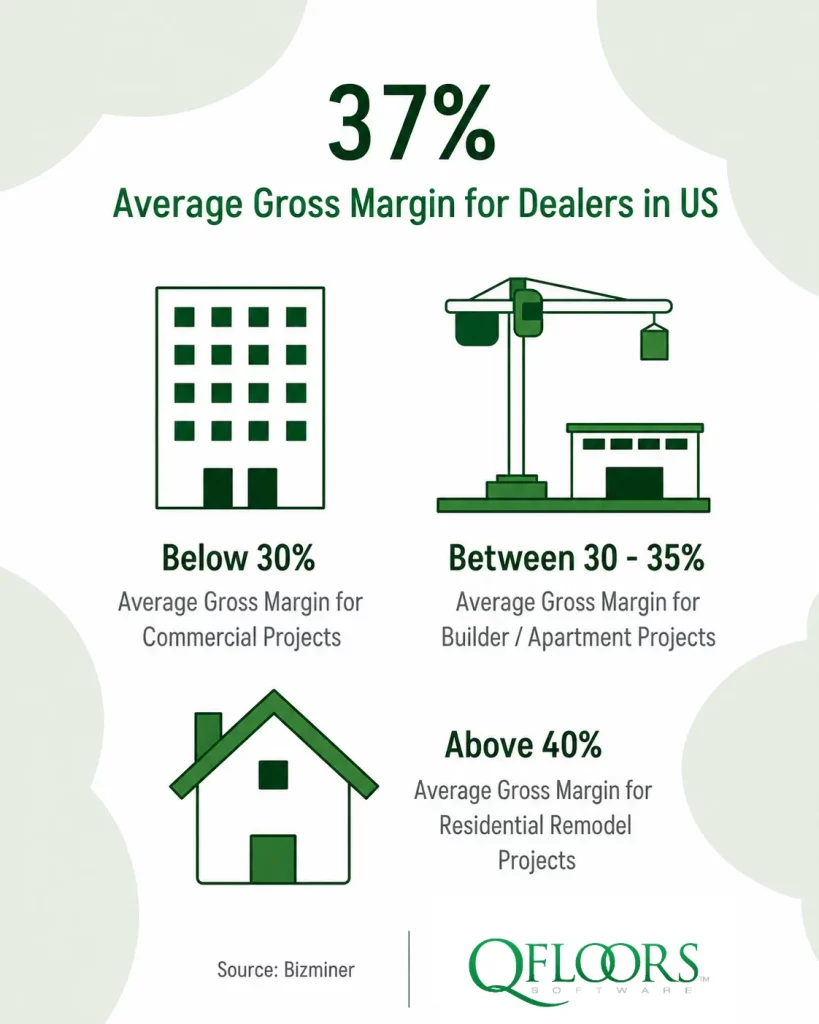
Flooring profit margins vary depending on the type of work, but many dealers use 37% as a benchmark for a healthy average gross profit margin.
Typical ranges include:
| Job Type | Typical Gross Margin |
|---|---|
| Industry average across flooring dealers | 37% |
| Commercial projects | Below 30% |
| Builder/apartment work | 30–35% |
| Residential remodel projects | 40%+ |
Where does the 37% benchmark come from?
Direct job costs (ie: materials and installation labor) typically account for about 63% of total revenue. The remaining 37% represents gross profit.
For Example:
Selling Price: $10,000
Materials + Labor: $6,300
Gross Profit: $3,700
Gross Profit Margin: 37%
This doesn’t mean every single job must hit 37%. Some projects will be higher and some lower.
The goal is to maintain a profitable average across your overall business.
Job Costing: The Habit Most Dealers Know They Should Have (But Don’t)
Job costing calculates the true profitability of a flooring project by comparing all job costs against the selling price.
A Complete Job Cost Includes:
- Product costs
- Installation labor
- Freight
- Commissions
- Taxes
- Tear-out and disposal costs
- Other project-specific expenses
- A share of business overhead
The best time to job cost is before you send the proposal, and not after the job is finished.
Job Costing Can Happen:
- Before the proposal: Confirm pricing is profitable before committing
- During the job: Monitor changes that impact profitability
- After completion: Review actual results and improve future estimates.
Despite knowing the importance of job costing, many dealers struggle to do it consistently.
The Most Common Challenges Dealers Face:
- No easy process. Manual calculations are a headache and take time.
- Missing information. Without accurate cost data, profitability calculations won’t be reliable.
- Bad timing. Many systems only show job profitability after the work is complete and after the pricing decision has been made.
This is where flooring-specific software can make a difference.
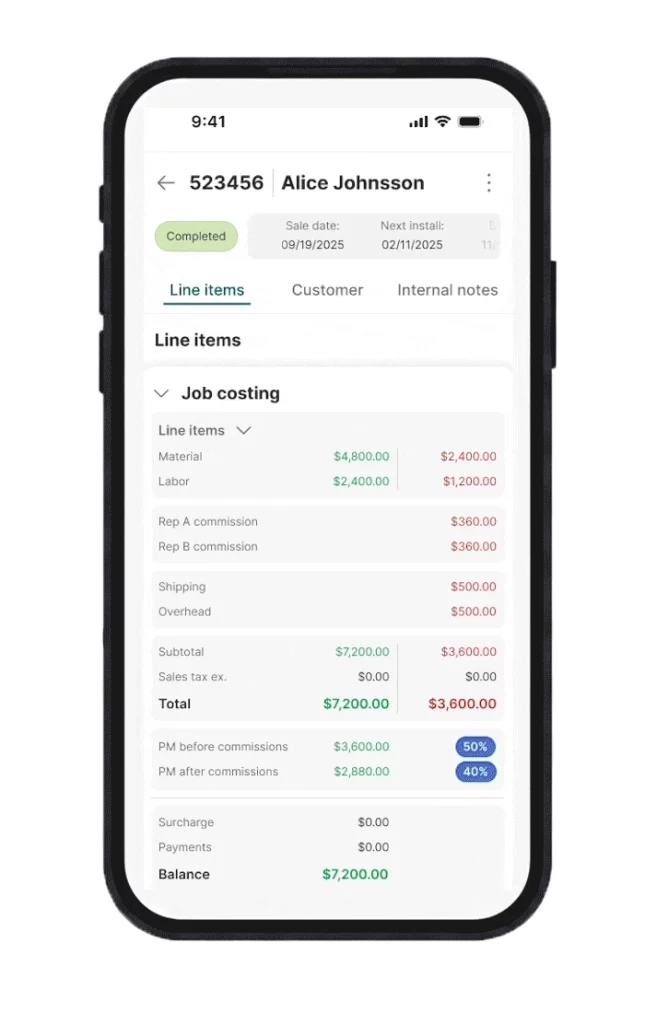
QFloors provides real-time job costing visibility while you’re still building the proposal, so dealers can understand profitability before the customer signs.
Here’s what that looks like in practice: Say you want to compare a 40% margin against a 45% margin on the same job. With job costing built into your software, you simply adjust the margin and immediately see how the pricing and profitability change.
Or flip it around. If a customer pushes back and says, “I’ll sign today if you can do the whole job for $5,500,” you can enter that price and instantly see whether the job still makes financial sense.
No spreadsheets. No back-of-napkin math. No unpleasant surprises.
Retail Price Formulas: Take the Guesswork Out of Every Quote
The third piece of the profitable flooring pricing puzzle is building retail price formulas.
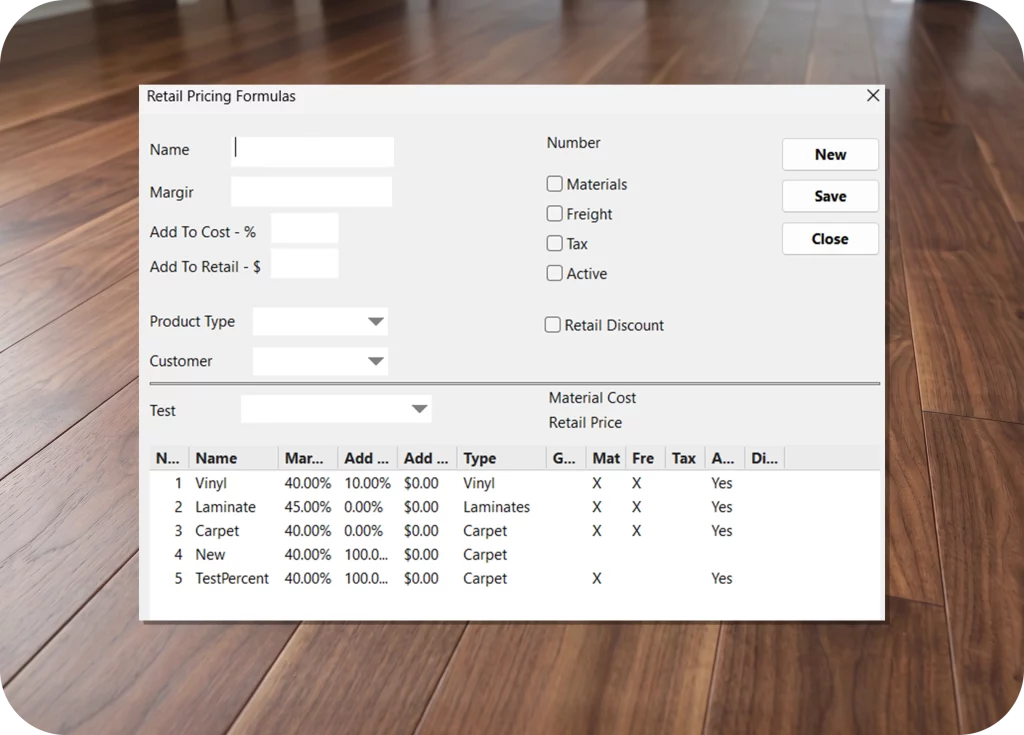
A retail price formula creates a suggested selling price based on your actual costs and desired profit margin. These formulas shouldn’t be one-size-fits-all. Hard surface products, for example, often carry higher freight and installation costs than soft surface products.
A Strong Formula Considers:
- Product cost by category
- Installation labor rates for tile, carpet, LVT, hardwood, etc.
- Freight costs by manufacturer and product type
- Service costs such as stairs, tear-out, and specialty installation, etc.
- Desired gross profit margin
- Business overhead
A Basic Pricing Formula Looks Like This:
Product Cost + Labor + Freight + Other Costs + Desired Profit Margin = Suggested Retail Price
Once these formulas are configured, quoting becomes faster and more consistent.
While setting up pricing correctly requires some upfront strategy, the right software can make the process much easier. QFloors and other flooring systems allow dealers to create category-specific pricing formulas and automatically generate suggested retail pricing whenever products are added to proposals.
This means salespeople can provide accurate pricing quickly without forgetting important costs like freight, labor variations, or overhead.
Frequently Asked Questions
The Bottom Line
Getting your pricing right comes down to three habits:
- Understanding the real difference between margin and markup
- Job costing every proposal before committing to a price,
- Use pricing formulas that reflect your actual costs.
In a market where customers can compare prices instantly , knowing your numbers is what keeps your business healthy.
QFloors’ real-time reporting and pricing tools are built to give flooring dealers the visibility they need to understand profitability, create accurate quotes, and make confident pricing decisions. If you’d like to learn more about QFloors, schedule a demo today.