Key Takeaways:
- Have a plan before you grow. Know what you’re good at, what you’re up against, and where the demand is.
- Know who you’re selling to. It changes what you stock, how you market, and what your showroom feels like.
- Follow up. Marketing gets people in the door, following up is what closes them.
- Watch what’s selling. Push more of what makes money, drop what’s sitting on the floor.
- Get your systems and numbers straight before growth exposes the cracks. Guessing works until it doesn’t.
- Make sure you can pay for it. Whether it’s a new location, more inventory, or more staff, they all cost before they can grow profit.
- Build a team that can run the place without you.
Growing a flooring business takes more than selling great products and providing quality installs. Whether you’re opening a second location, adding services, or growing your small flooring store into a stronger local business, growth takes a plan, efficient operations, healthy finances, and a team that can take on more projects.
You don’t have to tackle everything at once. Start by identifying where your business has the greatest opportunities, then work through each step.
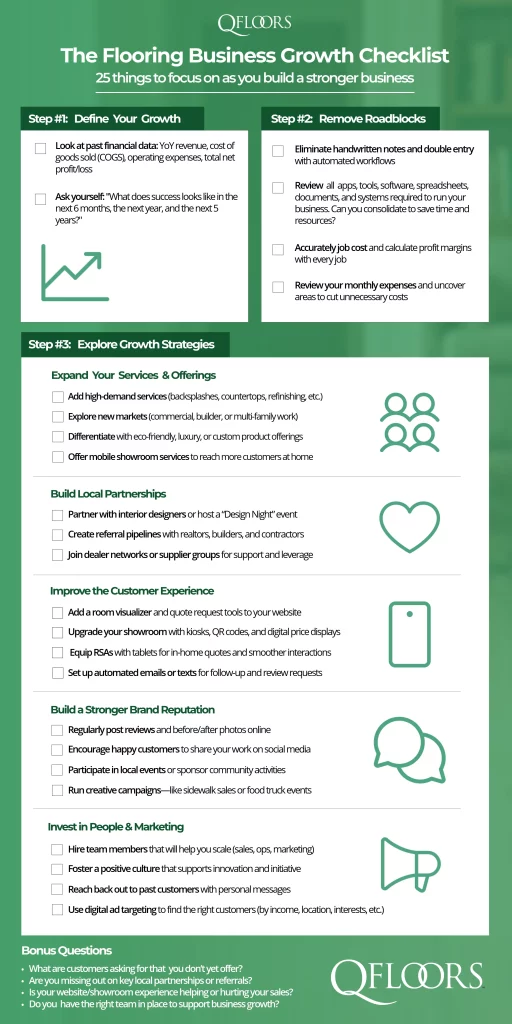
Define Your Vision and Growth Goals
Before you grow, you need to know what you’re working toward.
Picture the business six months, one year, and five years out. What do you see? More revenue? A second location? Your own install crews? A bigger name in town?
Start by asking:
- What does success look like for my business?
- What are my revenue and profitability goals?
- Where do I want the business to be in 1, 3, and 5 years?
- What would I need to change to reach those goals?
Pro Tip: Take a look at your numbers, too. Review past revenue, cost of goods sold, operating expenses, and net profit and loss. You can’t set a realistic goal without knowing where you’re starting from.

Identify Your Competitive Advantage
Why do customers pick you over the store down the road?
It could be your product selection, your installers, the way your showroom feels, or the fact that you’ve been in town for thirty years and people trust you. Whatever it is, name it. Then build on it.
Worth asking:
- What do customers compliment you on the most?
- What do you do better than your competitors?
- Do you carry or install anything nobody else around here does?
If you can answer those clearly, you know what to lead with in your marketing and what to protect as you grow.
Analyze Your Market and Competition
Growth starts with knowing what you’re up against.
Research other flooring stores in your area and look at what they offer, who they target, how they market themselves, and where they may be falling short. Remember: gaps are opportunities.
Watch for:
- Customers nobody in town is serving well
- Products or services your competitors don’t offer
- Work you’re not going after yet, like commercial, builder, or multi-family
- Styles and materials your customers are asking for
Pro Tip: You should also take an honest look at your own company. What are you strong at? Where are you thin? And what’s coming that could hurt you?

Know Your Ideal Customer
You can’t be the right store for everyone.
A young couple redoing a condo, a builder putting in forty units, and a homeowner spending big on a custom job all want different things. The more specific you get about who you want as an ideal customer, the easier every other decision gets: what you stock, how you advertise, how you handle a walk-in, etc.
Ask yourself:
- Who are the customers I most want more of?
- What kind of jobs do they bring in?
- What matters most to them when choosing a flooring store to work with?
- Where do they look for information or recommendations?
- What could make their experience easier?
Pro Tip: You may find it’s worth it to specialize in residential remodels, new construction, commercial flooring, high-end installations, or another specific market. Picking a lane can beat chasing everything.

Get People in the Door, Then Follow Up
Even the best flooring businesses will struggle to grow if people don’t know they exist.
Marketing brings people in, and a solid follow-up process turns them into closed revenue.
Build visibility through:
- A professional, search-friendly website
- Local SEO and Google Business Profile optimization
- Reviews and referrals
- Social media and email
- Paid advertising, if the math works in your market
- Relationships with builders, contractors, and designers
- Community involvement
Pro Tip: Don’t forget about existing customers. Reach back out to past customers with personalized messages, encourage happy customers to share reviews and photos, and look for opportunities to create referral relationships. Remember a customer who already trusts you is cheaper to sell to than a stranger.

Evaluate Your Products and Services
Your products and services are at the heart of your flooring business, and they drift if nobody is watching it.
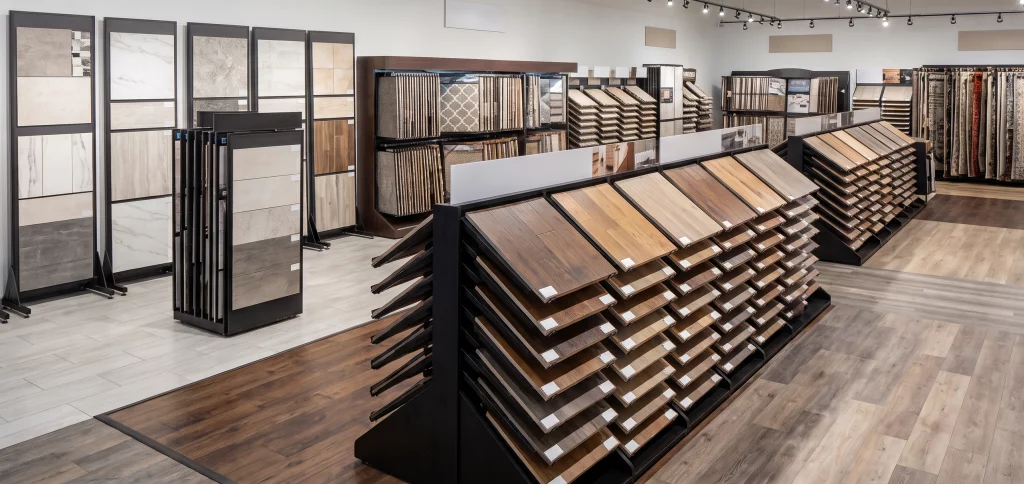
Go through it regularly. What’s profitable, what’s sitting, and what are customers asking for that you don’t carry?
Things to consider:
- Add high-demand services such as backsplashes, countertops, or refinishing
- Expand the categories that actually make money
- Cut or discount what’s been on the floor too long
- Try a mobile or in-home showroom if you don’t have one
Growing doesn’t mean you carry everything. It means you carry the right things for the customers you decided on in step four.
Streamline Your Operations
Growth exposes problems that weren’t as noticeable when your business was smaller.
Manual data entry, handwritten notes, entering the same order twice, disconnected systems, scattered customer information, and inefficient inventory processes can all make it harder to scale. While this may not break you at your current size, it will once you’re bigger.
Worth fixing before you grow:
- Eliminate handwritten notes and double entry
- Consolidate unnecessary apps, spreadsheets, and systems
- Accurately job cost every project so you see your profit
- Improve inventory management for quicker turnarounds
- Connect sales and accounting information for accurate financials
- Reduce repetitive administrative work that eats away your time every week
- Improve communication across your entire team
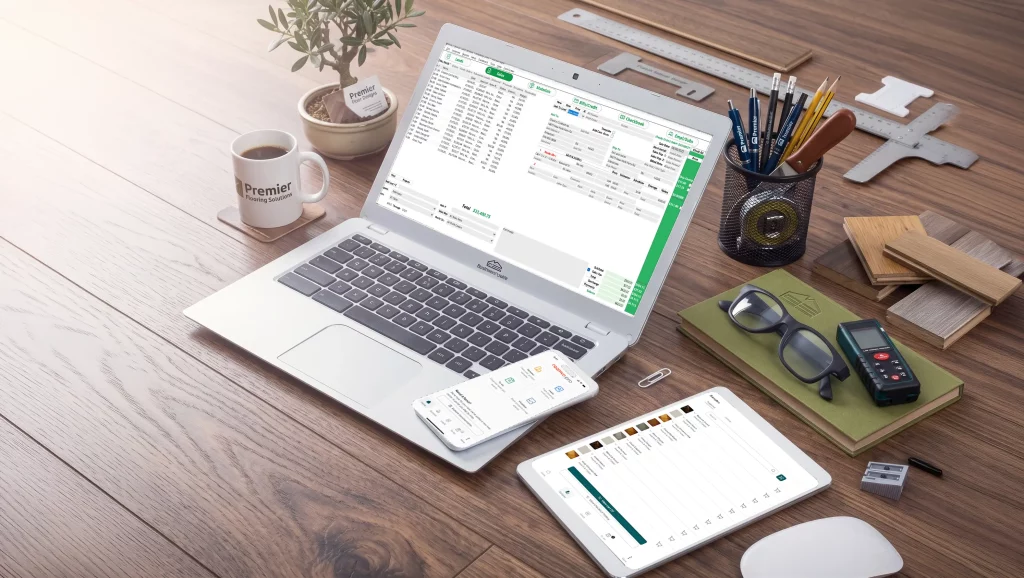
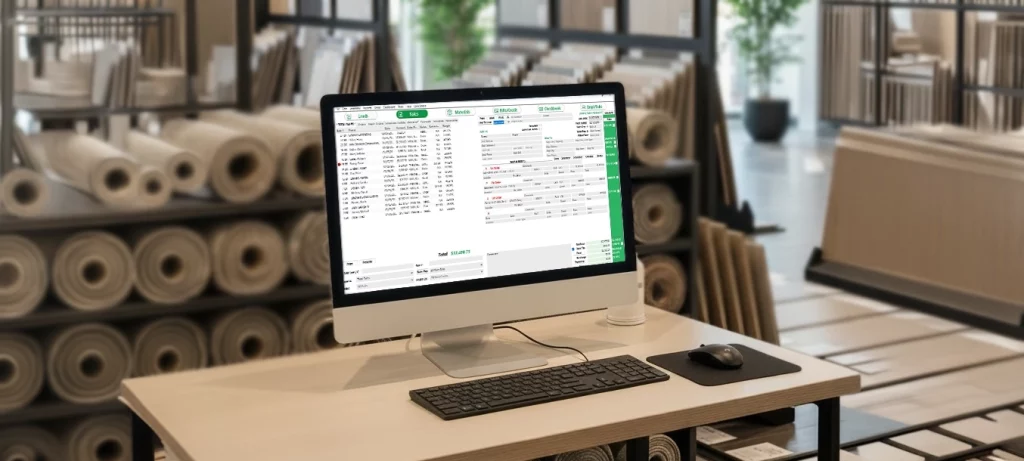
Pro Tip: Flooring management software can connect the parts of your business that otherwise need separate systems or manual work. For example, QFloors helps handle sales, inventory, job costing, and accounting in one place. This means the order your salesperson writes is the same record your bookkeeper sees.
The point isn’t to add technology just for the sake of adding technology. It’s to build systems that allow your business to handle more work without needing to hire more staff.
Know Your Numbers
You can’t make smart growth decisions without understanding your finances. Following your gut about how the year is going will only take you so far.
Keep a close eye on:
- Sales and gross margin
- Job costs
- Operating expenses
- Cash flow
- Accounts receivable
- Inventory
Pro Tip: Job cost every project, not just the big ones. That’s how you find out which kinds of work actually make you money and which ones you’ve been doing at a loss because they feel busy.

Plan How You’ll Fund Your Growth
Growth usually costs money before it makes any.
If you’re opening another location, expanding your showroom, purchasing additional inventory, hiring employees, or adding installation crews, determine how much capital you’ll need before moving forward.
You should be able to answer:
- How much funding do you need?
- What exactly is it for?
- When do you need it by?
- How will this pay you back, and how long will that take?
- How will you manage the additional financial risk?
Depending on your situation, funding could come from business cash flow, savings, financing, investors, or other sources. What matters is knowing which, and knowing before you’ve committed.

Build and Empower Your Team
You can’t grow a flooring business by yourself.
As the store gets busier, your employees need the training, tools, and processes to take on more without checking with you first.
That means:
- Hiring ahead of the growth, not after it
- Training new employees properly instead of throwing them in
- Documenting important processes
- Clearly communicating responsibilities
- Giving people the information to make their own calls
The goal is a store that runs without you putting out every fire. That’s what frees you up to work on the flooring business instead of in it.

What is the Best Way to Grow a Flooring Business?
There isn’t one answer that fits every dealer.
Some stores grow fastest by opening a second location. Others do better by fixing their sales process, going after commercial work, adding install capacity, or cleaning up how the place runs day to day.
The trick is knowing which one is your biggest opportunity, and building a plan around that instead of trying everything all at once.
When There’s a Plan, There’s a Way
Growing your flooring business isn’t just about getting more customers. It’s about being able to take on more customers, more jobs, and more revenue without everything getting harder.
A strong flooring business plan gives you a roadmap, but it shouldn’t be set in stone. Review your goals and financials regularly, pay attention to changes in your market, and adjust as you go.
The right technology and business partners also make growth easier, mostly by taking manual work off your plate so you can spend that time on customers instead.
Pro Tip: Upload your plans, strategies, and data into an AI tool like Gemini, ChatGPT, or Claude. They’re useful for working through scenarios, spotting trends, and building simple dashboards. Even a little context goes a long way, and it compounds as you keep using it.